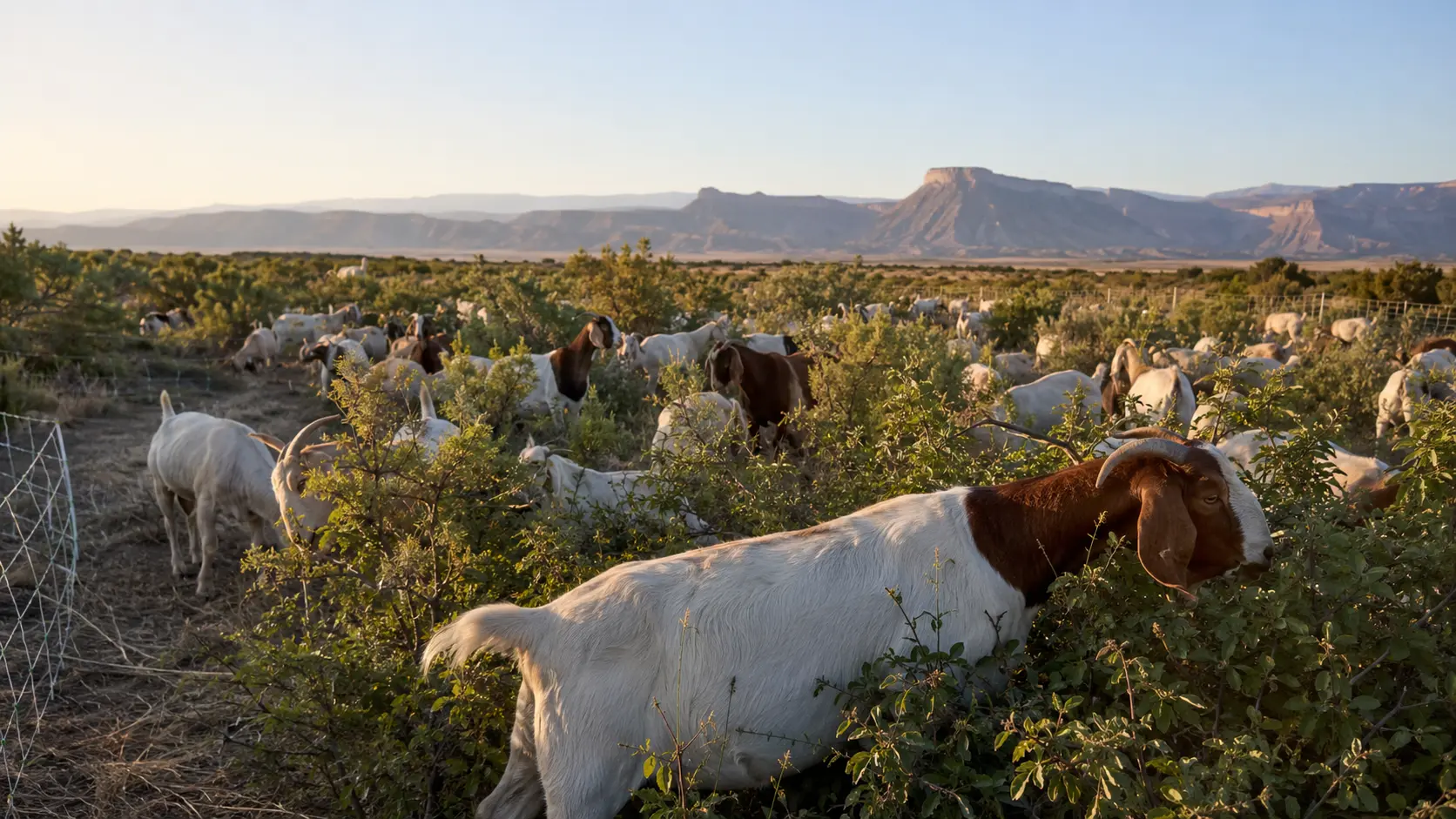
Targeted grazing can help suppress selected weeds by removing leaves and seed heads, reducing standing biomass, and repeatedly interrupting plant growth. Its usefulness depends on the species, growth stage, site conditions, and long-term objective.
The goal is usually suppression and improved management—not a promise of instant eradication.
Timing matters
The same plant may respond differently depending on when it is grazed. Work may be timed to reduce flowering or seed production, stress regrowth, open a dense stand, or prepare a site for follow-up. Some plants are palatable at one stage and ignored at another.
Plant identification matters. Known toxic plants, chemical-treatment history, irrigation conditions, and surrounding forage all affect whether and how a site should be grazed.
Part of a longer strategy
Established weed populations often reflect a larger disturbance such as bare soil, altered water movement, repeated soil disturbance, or missing competition. Depending on the site, the next step may include repeat grazing, reseeding, rest, soil cover, spot treatment, mechanical work, or changes in management.
Know the target plant?
Include its name. If not, send close photographs of leaves, stems, flowers, and the full stand.